
Revenue vs. Profit: What Real Estate Investors Miss

If you're a real estate investor, you've probably felt this before: the rent rolls in, the portfolio looks bigger every year, and on paper you're doing great — but your bank account doesn't reflect it. That gap is the difference between revenue and profit, and it's the single most common blind spot I see when I open up a new investor's books. Revenue is what came in. Profit is what you actually get to keep. Confusing the two is how investors end up cash-strapped while their portfolio is technically growing.
1. The Revenue Trap
Revenue is seductive because it's the number that's easiest to see — total rent collected, gross income, the top line on your spreadsheet. But revenue doesn't account for a single expense. A portfolio that collects $40,000 a month in rent can still lose money if the costs to run it exceed that. Investors who only watch revenue tend to keep expanding — buying the next door, taking the next deal — without knowing whether the doors they already have are actually profitable. Growth built on revenue alone is growth built on a guess.
2. Gross Rent Isn't Income
Every dollar of rent that hits your account has claims against it before it's yours: the mortgage, property management fees, insurance, taxes, repairs. What's left after all of that is your real income — and for a lot of investors, it's a fraction of what the rent roll suggests. This is the single most common misread I see in investor books: treating the deposit into the bank account as the number that matters, instead of what's left after every obligation tied to that property is paid.
3. The Hidden Costs Investors Forget
Beyond the obvious expenses, there are costs that don't show up until they do: vacancy periods, capital expenditure reserves for the roof or HVAC that will eventually fail, turnover costs between tenants, and the time value of your own labor if you're self-managing. None of these hit every month, which is exactly why they get left out of the mental math — and exactly why they matter. A property that pencils out fine on a good month can go negative the month the water heater goes out.
4. Cash Flow, Profit, and Wealth-Building Are Three Different Numbers
Investors often use these terms interchangeably, but they answer different questions. Cash flow tells you what's in the account this month. Profit tells you what you earned after every real cost, including the ones that aren't monthly. Wealth-building includes appreciation and equity paydown — value you're building that you can't spend yet. A property can be cash-flow positive and still not be building real wealth, or profitable on paper while cash-poor in the moment. Knowing which number you're looking at changes what decision it should drive.
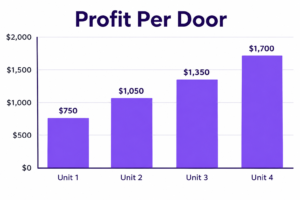
5. Track Profit Per Door, Not Just Portfolio Revenue
One of the most useful shifts I make with investor clients is moving from "how much did the portfolio bring in" to "how much did each door actually net." Profit per door exposes the properties that are quietly dragging the portfolio down — the ones that look fine buried in a combined total but are barely breaking even, or losing money, on their own. You can't fix what you can't see at that level of detail.
6. What This Looks Like in Real Books
A common pattern: an investor with eight doors and strong-looking gross rent assumes the portfolio is healthy because the bank balance stays positive. When we break it down door by door, two properties are covering the losses of two others, and the investor had no idea. Nothing was wrong with their rent collection — the problem was they'd never separated revenue from profit at the property level, so the under performers were invisible.
7. What to Track Every Month
You don't need a finance degree to close this gap — you need to look at the right handful of numbers, monthly, per property: gross rent collected, total operating expenses, net operating income, debt service, and true cash flow after reserves. Reviewed consistently, these five numbers tell you which doors are working, which aren't, and whether you're actually building wealth or just carrying more revenue than you realized.
Where to Start
If you're not sure whether your portfolio's revenue is actually translating into profit, that's exactly what a proper monthly bookkeeping process is built to show you. If you're a real estate investor, our REI Class walks through exactly how to set this up for your own portfolio. If you're running a business outside of real estate and this same revenue-vs-profit gap sounds familiar, start with our free Financial Health Check to see where your numbers actually stand.